


[ad_1]
Most music genres are defined by their sound. Shock rock is all about the presentation.
With theatrical live performances, taboo subject matters, provocative imagery and a clear objective to challenge societal norms, shock rock is a unique art form unto itself.
Historically speaking, it took some time for the genre to really take shape. Artists like Screamin’ Jay Hawkins – the singer-songwriter behind “I Put a Spell On You,” who was known for infusing macabre themes into his material – set a foundation for shock rock in the ‘50s. In the ‘60s, acts like the Doors and the Velvet Underground mixed dark tones and controversial subjects into their music, but it wasn’t until the ‘70s that shock rock really became its own beast.
With costumes, makeup and props, bands began to approach concerts less like a show and more like an event. Performances had overriding themes, with stunts planned to startle and awe the audience in attendance. Blood, guts, fire, and symbols of death were just some of the things fans came to expect when they showed up for a shock rock show.
With apologies to several of the genre’s notable trailblazers – including Arthur Brown, Gwar and Slipknot – here are our Big 4 of shock rock acts.
Keystone, Getty Images
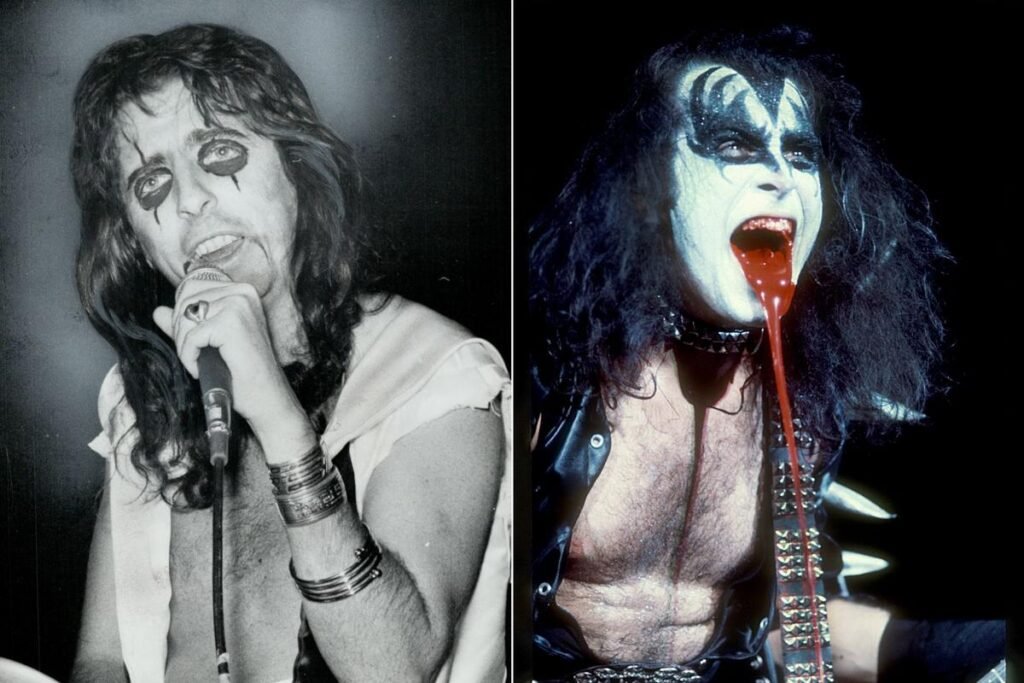
Alice Cooper
Only one man in the world is regarded as the Godfather of Shock Rock: Vincent Furnier, known to the world as Alice Cooper.
Early in his career, the singer expressed a desire to embrace theatrical elements in his performances. He based his onstage appearance on such famous films as What Ever Happened to Baby Jane? and Barbarella. However the shock factor came in later, and arrived by accident.
As the legend goes, Alice Cooper (the band) was playing a concert in Toronto in 1969. A chicken somehow made its way onstage and Alice Cooper (the man) threw it into the crowd, thinking it could fly. Instead, the bird crashed into the audience and was torn to shreds. The incident became legendary, with various versions of the tale – including one in which Cooper allegedly drank the chicken’s blood – spreading among rock fans. Cooper and his bandmates realized the power of shock value and began carefully coordinating dramatic stunts into their performances.
READ MORE: Alice Cooper Albums Ranked Worst to Best
Over the years, Cooper has defined everything that makes shock rock captivating. Cooper’s theatrical antics have included electric chairs, swordplay, hangings, snakes and the use of a guillotine. Unsurprisingly, the rocker has had several close calls during his shows, nearly dying onstage numerous times due to stunts gone wrong. Still, that hasn’t stopped him from continuing his shock rock ways, much to the bloody delight of his fans.
Cooper is in the Rock & Roll Hall of Fame, has a star on the Hollywood Walk of Fame and remains a tireless performer. Put simply, he is the artist by which all other shock rockers are measured.
Scott Gries, Getty Images
Marilyn Manson
Controversial from the moment he arrived in the public’s eye, Marilyn Manson is the defining shock rock artist to a generation of music fans.
When Manson broke out in the mid-’90s, nobody knew what to believe. His brand of dark, industrial hard rock was paired with disturbing imagery – such as leather, whips and demented makeup – along with sexual androgyny and a nightmarish persona.
Manson’s songs and music videos became a lightning rod for controversy, as conservative groups accused him of warping the minds of America’s youths. Even while the singer was being blamed for tragedies like the Columbine shooting, his popularity continued to soar. Albums like Antichrist Superstar (1996) and Mechanical Animals (1998) reached platinum sales, while the rocker’s demonic identity made him a hero to goth kids everywhere.
Onstage, Manson blended the line between entertaining and disturbing. Every aspect of his live shows – from the stage design and symbolism, to the outfits and lighting effects – were designed to amplify his twisted perspective on politics, family life and the American dream.
A discussion on Manson is not complete without mention of the many serious accusations against him. Over the years, several women have accused the musician of sexual assault, including his former fiancée, actress Evan Rachel Wood. Despite numerous allegations, Manson has never been found guilty in a criminal court. He has, however, reached civil settlements.
Separating the artist from the man is never easy, especially given the severity of the claims against Manson. Still, there’s no denying his impactful, yet controversial, place in shock rock’s history.
Michael Ochs Archives
Kiss
Surprised to see Kiss on this list? You shouldn’t be. With their iconic makeup, otherworldly costumes, larger-than-life personas and engrossing live shows, Kiss was integral in the growth of shock rock.
“Basically, the self-imposed mandate was, ‘Let’s put together the band we never saw onstage. Let’s kick them in the nuts. Let’s give them something they’ve never seen before,’” Gene Simmons once recalled to AXS TV. “So all the rules went out the window. We didn’t want to look like other bands.”
READ MORE: The Best Song From Every Kiss Album
Kiss certainly stuck to that manifesto, and their theatrical leanings turned their concerts into must-see events. Pyrotechnics, fire breathing, blood spitting, zip lines, guitars that could shoot rockets – anything Kiss could imagine, they brought into their live shows.
From the moment Kiss arrived in the 1970s, to the day they decided to unmask in 1983, the group pioneered a provocative brand of rock and roll. Parents bristled with their demonic personas and rebellious attitudes and critics questioned whether there was any substance behind their style, but fans licked it up.
Karl Walter, Getty Images
Rob Zombie
No rock star has ever embraced cinematic horror quite like Rob Zombie. From his days in White Zombie to his successful solo career, the dynamic singer has created a distinctive Halloween-like world.
Zombie’s fascination with theatrical storytelling began at an early age. The future rocker loved horror films and dreamed of becoming a combination of Alice Cooper, Steven Spielberg and Stan Lee. He also had a morbid curiosity for dark and disturbing tales, like his obsession with the Salem Witch Trials.
When White Zombie was founded in the mid-’80s, Zombie brought all of these influences with him. The music was industrial hard rock, while the lyrics melded on horror film references, along with topics like death and decay. Zombie continued along this demented path in his solo career, before later – prophetically – jumping into filmmaking.
Onstage, Zombie looked like a supernatural being. His wild hair, piercing eyes and guttural growl made him seem like a henchman sent by the devil. The concerts often delivered chaotic spectacles, with blood, pyrotechnics and monstrous characters all mixed in. The rocker took every measure to make sure his concerts felt like a nightmare come to life, in the most entertaining way possible.
https://ultimateclassicrock.com/rock-stars-who-nearly-died-onstage/
[ad_2]
Source link
Comentarios