


[ad_1]
When glam rock emerged in the early ’70s it didn’t just change the sound of music, it completely transformed what rock and roll looked like.
In the years preceding glam’s arrival, there was a general uniformity to rock. Bands looked a certain way, acted a certain way, sounded a certain way; glam rock flipped this on his head.
The new sub-genre was more flamboyant and theatrical than anything before it. Colorful costumes, sparkly makeup, sexually androgynous performers — glam truly pushed back against societal norms of the time.
READ MORE: Who Are the ‘Big 4’ of New Wave?
«Glam really did plant seeds for a new identity,» David Bowie once explained. «I think a lot of kids needed that – that sense of reinvention. Kids learned that however crazy you may think it is, there is a place for what you want to do and who you want to be.»
Glam rock also approved to be a an influential era for rock’s evolution. It heavily influenced sub-genres that followed it, such as punk and new wave, laying the groundwork for their future success. Below, we examine identify a big four of glam rock, examining why each of them we’re vital to the genre of success. Spoiler alert: We’ve already mentioned the first artist on our list.
Steve Wood/Daily Express/Hulton Archive, Getty Images
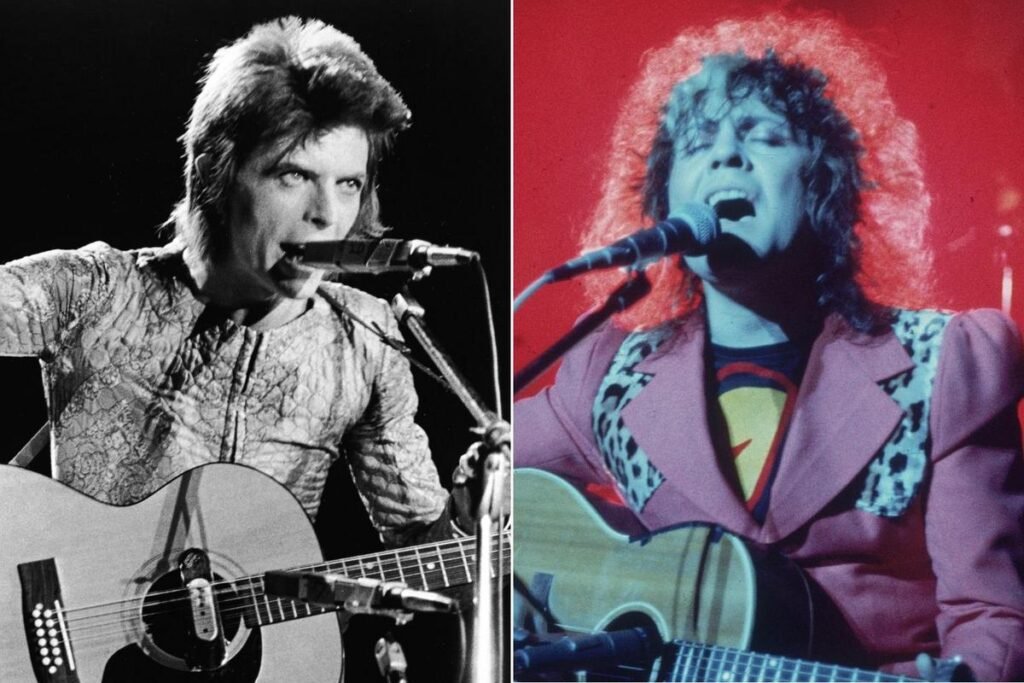
David Bowie
David Bowie didn’t invent glam rock, but he certainly perfected it. While some of his early work hinted towards glam, he didn’t really make the transformation until his groundbreaking 1972 album The Rise and Fall of Ziggy Stardust and the Spiders from Mars. Mixing elements of art rock and pop music with theatrical influences and sci-fi themes, Bowie boldly created a whole new world. His Ziggy Stardust persona came with colorful costumes, bright makeup and fabulous live shows, all of which played a massive part in the glam movement.
Of course, none of this would have mattered without the music. The Rise and Fall of Ziggy Stardust and the Spiders from Mars was loaded with incredible tracks, including such classics as “Starman” and “Suffragette City.” It was the album that brought glam rock to the masses, making it a mainstream genre wordwide.
During this time, Bowie embraced an androgynous identity. The rocker pushed boundaries of art and gender, establishing himself as a fearless creative force. His glam rock period would continue through Aladdin Sane (1973) and Diamond Dogs (1974), another two of his most celebrated albums. More than a musician, Bowie was a rock icon and the figurehead of the glam movement.
Hulton Archive, Getty Images
T. Rex
While Bowie was the genre’s biggest star, he was not glam rock’s first star. That honor is generally reserved for Marc Bolan, the dynamic frontman of pioneering glam rock group T. Rex.
After evolving from early folk rock beginnings, Bolan and his band developed a style that incorporated elements of psychedelic rock and pop music. Powered by driving rhythms, powerful riffs and incredibly catchy melodies, T. Rex helped define the sound of glam. Their 1971 album Electric Warrior is regarded as the genre’s breakthrough release, a captivating LP featuring the swaggering hit “Get It On.”
Bolan’s personal style was also integral to the growth of glam rock. From his wild fashion sense, to his glittery makeup, the singer embodied the genre’s otherworldly allure. While Bolan and Bowie were close friends, they also had a fierce rivalry (Bowie’s Ziggy-era song “Lady Stardust,” is widely considered to be about Bolan). Still, it was Bolan who initially became the face of glam rock, especially in the U.K. Without his inspiration, it’s possible Bowie never would have taken the giant leap to Iggy Stardust.
P. Felix/Daily Express/Hulton Archive, Getty Images
New York Dolls
While much of the glam movement was emanating from the U.K., New York Dolls led the charge on American soil. With a raw, more punk-like sound than their English counterparts, the Dolls delivered a distinctive brand of glam that fused theatrics with classic blues rock influences.
Wild clothing was certainly part of the group’s attraction, with high heels, teased hair, bright makeup and gender-bending outfits all part of their look. It wasn’t uncommon to see frontman David Johansen donning spandex, stockings or lingerie onstage.
The New York Dolls were shocking for their time – bold, provocative and overflowing with charisma. Their 1973 self-titled album remains a massively influential release, impacting both the glam and punk sub-genres.
Brian Cooke/Redferns, Getty Images
Roxy Music
Roxy Music offered the thinking man’s glam. The key elements of the movement remained – wild fashion, brash personalities, theatrical stage shows and an otherworldly element. But they augmented this with a sophisticated, art rock style that separated Roxy Music from anything.
Led by Bryan Ferry – an art teacher-turned musician who wielded a keen sense of imagination – Roxy Music was boldly experimental in everything from the clothes they wore to the multi-layered instrumentation of their songs. The band’s 1972 self-titled debut album expertly blended futuristic electronics with classic rock influences.
Follow-up For Your Pleasure pushed things even further, mixing upbeat tunes with dark, atmospheric pieces. showed that glam could be intellectually daring as well as exciting. Brian Eno – the band’s synthesizer player – became known for his vastly experimental ideas, helping shape Roxy Music as one of the era’s most innovative acts. He departed after the second LP, but the band’s legacy was already cemented.
David Bowie Albums Ranked
David Bowie is not just rock’s greatest chameleon; he’s also one of music’s most imaginative conceptual artists.
Gallery Credit: Bryan Wawzenek
[ad_2]
Source link




Comentarios